Global Patients
How K-DIA Turns Multilingual Patient Communication into a Clinic-Wide Workflow
International patient communication becomes difficult when bookings arrive through one channel, consultations continue elsewhere, and only one coordinator remembers the context. K-DIA gives Korean clinics a single patient-and-clinic app for managing these interactions as one connected workflow.
Patients can book, receive reminders, consult the clinic, leave reviews, and manage revisits through K-DIA. Meanwhile, the clinic director gains a clearer view of the everyday activity behind the patient journey.
One Mobile Entry Point for Global Patients
K-DIA connects multilingual booking and in-app consultation in one mobile environment. A prospective patient can move from an appointment request to a conversation with the clinic without the team having to reconstruct the inquiry across disconnected tools.
One-tap booking reduces friction at the beginning of the journey. Appointment reminders then help the clinic keep essential scheduling information visible to the patient before the visit.
Multilingual support is especially valuable for clinics serving patients who may be researching Korea from another country. It gives the clinic a more consistent operational channel while making routine communication easier to follow for the patient.
The K-DIA patient-and-clinic platform is designed around this continuity. Booking is not treated as an isolated form submission; it becomes the first recorded step in an ongoing clinic relationship.
Table: How K-DIA connects fragmented patient communication
| Patient journey stage | When channels are disconnected | With K-DIA |
|---|---|---|
| Initial inquiry | Messages may arrive in separate inboxes | In-app consultation provides a shared channel |
| Booking | Details may need to be entered again | One-tap booking connects the request to the patient journey |
| Before the visit | Staff send reminders through separate tools | Appointment reminders remain within the workflow |
| After the visit | Follow-up depends on individual staff habits | Reviews and revisit activity can be managed in sequence |
Consultation History That Belongs to the Clinic
International patient consultations often involve several questions, internal checks, and handovers. When that context stays in an employee’s personal notes or a standalone messenger, another team member may struggle to continue the conversation accurately.
K-DIA accumulates consultation history inside the app. If the original coordinator is unavailable, an authorized colleague can review the conversation context and respond from the point where it stopped.
This does not replace professional judgment or the clinic’s own communication policies. It gives the team a shared operational record for managing questions, appointment details, and follow-up responsibilities more consistently.
The result is a workflow that is less dependent on one person’s memory. Directors can establish a repeatable approach to patient communication without forcing staff to search multiple channels before every reply.
From Booking to Reviews and Revisits
K-DIA supports more than the first appointment. Its booking, reminders, in-app messaging, review collection, revisit management, and CRM capabilities connect successive patient interactions within the same platform.
After a clinic interaction, the app can provide a clear route for review collection. That makes review requests part of the established patient journey instead of an occasional task remembered only by individual employees.
Revisit and CRM functions help the clinic organize continued communication with existing patients. Staff can identify where follow-up is needed and manage the next interaction with the benefit of previous activity recorded in K-DIA.
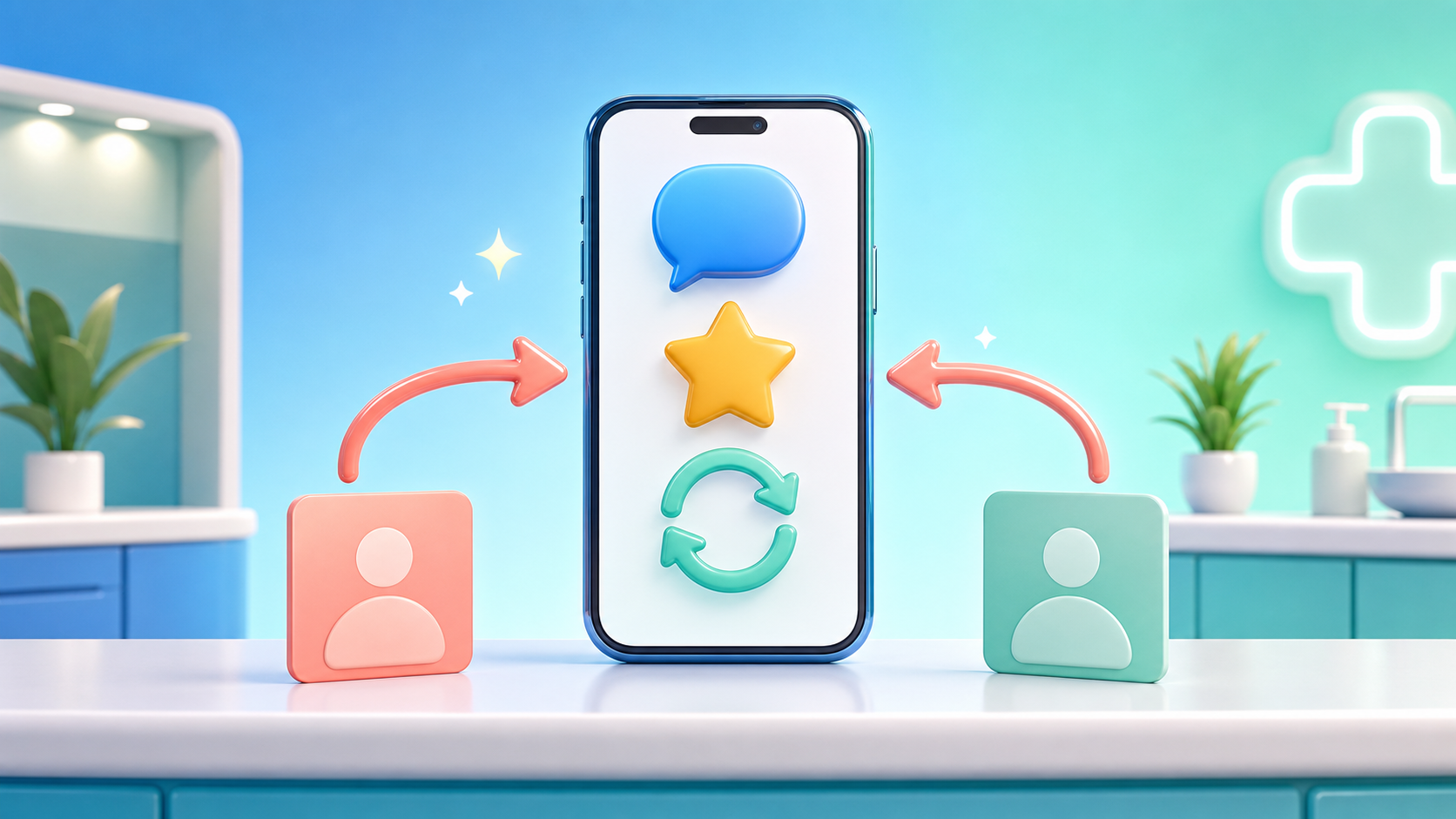
This connected structure matters for global patients because their relationship with a Korean clinic may extend across time zones and multiple visits. K-DIA keeps each operational stage related to the same journey rather than turning every new conversation into a fresh start.
Table: The connected K-DIA patient journey
| K-DIA capability | What the patient experiences | What the clinic team gains |
|---|---|---|
| Multilingual support | Communication in a more accessible environment | A consistent channel for global inquiries |
| One-tap booking and reminders | A simpler path to scheduling and preparation | Less fragmented appointment coordination |
| In-app consultation | An ongoing conversation with the clinic | Shared context for authorized staff |
| Review collection | A visible post-visit feedback route | A repeatable review workflow |
| Revisit and CRM management | More continuity across interactions | Organized follow-up based on recorded activity |
Everyday Activity Becomes Operational Insight
The value of K-DIA is not limited to patient-facing convenience. Booking and consultation activity generated through normal work also creates a practical data foundation for understanding clinic operations.
A director can examine how patient inquiries, appointments, reviews, and revisits move through the workflow. This makes it easier to spot stages that require attention, such as conversations awaiting follow-up or processes that rely too heavily on manual coordination.
The World Health Organization’s global digital-health strategy emphasizes the role of digital technologies in strengthening health systems. The OECD also examines how health data and digital tools support more informed, resilient health services.
K-DIA applies that broad direction to the daily reality of a clinic. It turns routine administrative interactions into structured operational visibility without making staff maintain a separate reporting process for every task.
These insights describe workflow activity, not clinical quality or treatment outcomes. Directors should interpret them alongside their own policies, staffing context, and service model.
Start Small and Build a Standard Process
A clinic does not need to change every workflow at once. K-DIA can begin with a focused task, such as multilingual appointment requests or shared consultation history, before expanding into reviews, revisit management, and CRM.
Access permissions can be defined according to staff roles. The clinic can also establish which replies employees may send directly and which require internal approval, helping communication remain aligned with clinic policy.
For example, coordinators might handle routine scheduling questions while designated managers approve replies involving sensitive or exceptional circumstances. Clear boundaries allow K-DIA to support teamwork without making every user responsible for every decision.
Clinics operating in Korea should design these processes in line with applicable requirements and official guidance. The Ministry of Health and Welfare and Korea’s National Law Information Center are authoritative starting points for checking current healthcare and legal obligations.
A practical adoption sequence
Begin with one patient journey and define its owner, permitted users, response boundaries, and handover rule. Once staff can use that flow consistently, connect the next stage rather than launching every capability simultaneously.
The aim is to make K-DIA part of ordinary clinic work. When the platform becomes the expected place for booking, consultation, reviews, and revisits, consistent records and useful operational insight follow naturally from everyday activity.
A Shared Operating Window for the Director
For a clinic director, K-DIA provides a view across patient-facing communication and back-office coordination. It shows how work progresses without requiring every update to be gathered through separate conversations with staff.
For patients, the same platform offers a clearer journey from inquiry and booking to follow-up. For the team, it provides shared history, structured responsibilities, and a practical base for managing ongoing relationships.
K-DIA therefore functions as more than another messaging channel. It is the workflow connecting multilingual access, appointments, consultation context, reviews, revisits, CRM, and operational insight.
Clinics ready to evaluate how that workflow fits their global patient operations can arrange a K-DIA implementation consultation. The most useful starting point is a real journey your staff already manages every day.
FAQ
Can K-DIA support both domestic and international patient workflows?
Yes. K-DIA brings booking, reminders, in-app consultation, reviews, revisits, and CRM into one platform, while multilingual support helps clinics extend the same structured workflow to global patients.
What happens when the staff member handling a consultation is absent?
Authorized team members can review the accumulated in-app consultation history and continue from the existing context, subject to the clinic’s access and approval rules.
Can a clinic introduce K-DIA without changing every process immediately?
Yes. A clinic can begin with a focused workflow, such as multilingual booking or shared consultation records, and expand to reviews, revisit management, and CRM after staff establish consistent routines.
How should permissions be configured?
The clinic should match access to staff responsibilities and define which routine replies may be sent directly. Sensitive, unusual, or policy-dependent responses can be reserved for designated approvers.
Does K-DIA provide clinical recommendations or predict treatment results?
No. K-DIA is presented here as a patient communication and clinic operations platform. Its data and insight functions relate to workflow activity such as bookings, consultations, reviews, and revisits.
Sources
Related articles
Global Patients
K-DIA Global Support: Consistent Patient Communication Across Languages
How K-DIA helps clinics standardize multilingual booking, consultation, reviews, and revisit workflows in one connected patient app.
Global Patients
How K-DIA Standardizes the Global Patient Experience Across Your Clinic
See how K-DIA connects multilingual booking, consultation, reviews, CRM, and operational insight for a consistent global patient journey.
Global Patients
K-DIA: One App for Multilingual Inquiries, Consultations, and Booking
See how K-DIA connects multilingual inquiries, consultation history, booking, reminders, reviews, CRM, and operational insight in one patient journey.