Global Patients
Keep International Patient Conversations Connected with K-DIA
K-DIA, DIA/AD’s patient-and-clinic app, gives international patients a consistent place to message your clinic, book appointments, and stay connected afterward. For clinic owners and medical-tourism operators, it brings these interactions into a connected patient journey.
The practical appeal is continuity. A question about visiting your clinic can lead to an appointment, a reminder, and later revisit communication within the same app. Your team has a clearer setting for keeping those steps connected.
Give international patients a familiar place to return
An international patient’s first question is rarely their last. They may ask about appointment availability, return later to clarify arrival arrangements, and contact the clinic again after their travel plans change. Each exchange adds context to the next.
K-DIA combines multilingual support with in-app consultation and messaging, giving patients an app-centered point of contact. For a clinic serving visitors to Korea, that creates a practical place to continue the conversation as questions develop.
Korea’s Medical Korea portal provides official information for international patients exploring care in the country. That broader context makes accessible communication relevant; K-DIA’s role here is to connect the clinic’s everyday communication and appointment workflow.
Picture a prospective patient opening K-DIA to ask how to arrange a visit. When they return with another question, the app remains their contact point. Your clinic can organize its response around the ongoing conversation.
Explore the K-DIA patient-and-clinic app through that everyday scenario: a patient needs an answer, then a next step, then a reliable way to reconnect.
Make continuity part of the handover
International patient coordination often involves reception staff, language support, and appointment coordinators. A conversation may begin during one shift and continue during another. The operational challenge is preserving what the patient has already been told.
With K-DIA as the communication point, clinics can organize handovers around previous guidance and unanswered questions. The receiving colleague needs to understand the patient’s current request, what remains unresolved, and who should respond next.
That approach gives the app a concrete role in daily work. A coordinator can prepare a handover around the conversation rather than relying on a colleague to recall every detail. The clinic should confirm how message access and history work in its intended setup.
Table: Connecting patient questions with clinic responsibilities
| Patient situation | K-DIA capability | Clinic responsibility |
|---|---|---|
| A visitor asks about arranging a visit | Multilingual support and in-app messaging | Assign an appropriate responder |
| Another coordinator takes over | App-centered conversation continuity | Review previous guidance and open questions |
| The patient is ready to choose a date | One-tap booking | Maintain appointment availability |
| The appointment approaches | Reminders | Keep scheduling information current |
| The patient contacts the clinic again | Revisit and CRM capabilities | Review the purpose of the next interaction |
K-DIA provides the app around which this process can be organized. Your clinic supplies the response responsibilities that make it dependable, including coverage during staff absences and a clear route for questions that require further review.
Connect the conversation to an appointment
A useful patient conversation should make the next administrative step clear. Once an international patient is ready to arrange a visit, K-DIA’s one-tap booking brings appointment action into the same app they use to contact the clinic.
Consider a patient asking whether a visit fits their travel schedule. Your coordinator can clarify the scheduling question, and the patient can move into booking within K-DIA. Reminders then support awareness of the upcoming appointment.
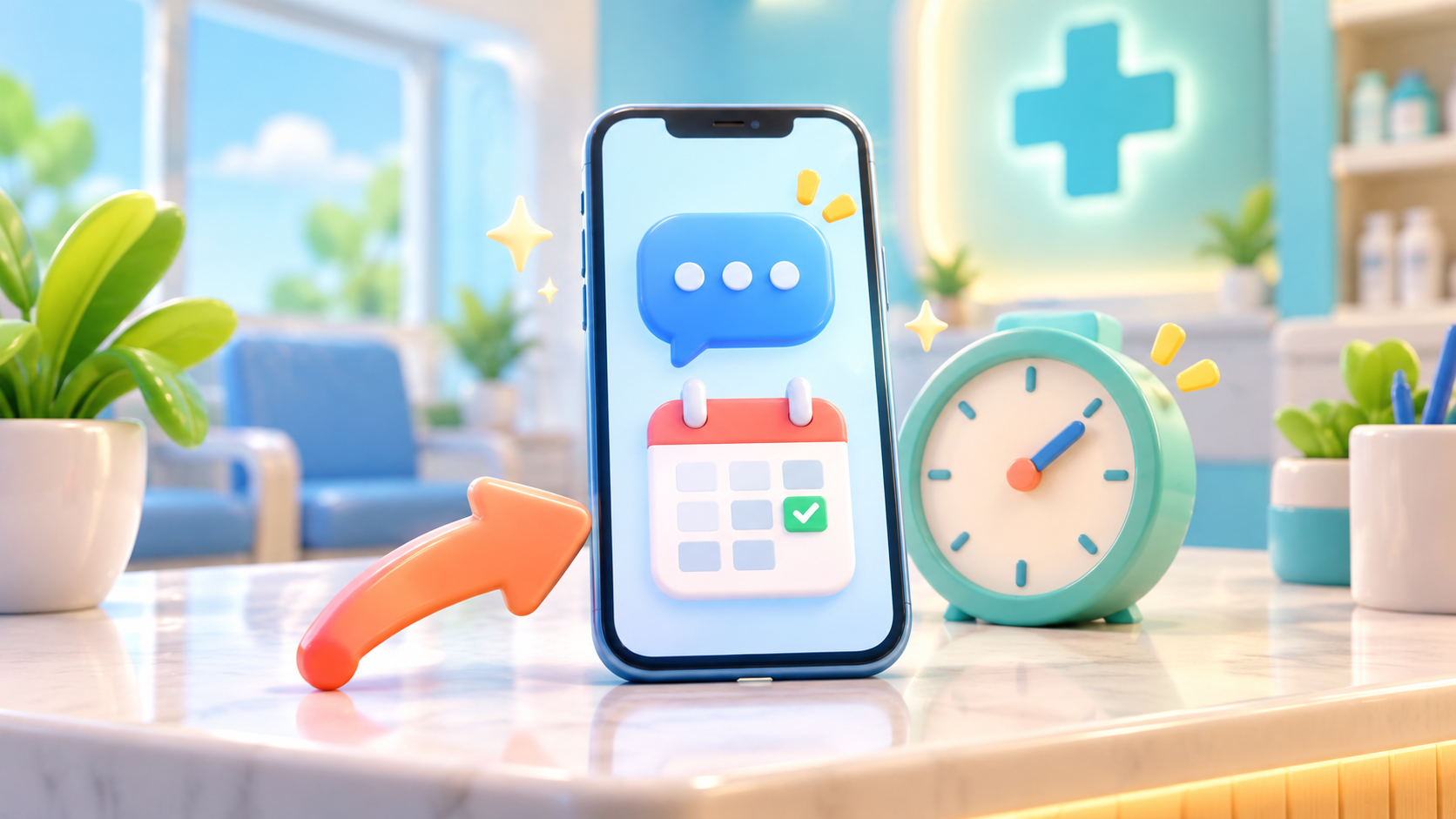
For your reception team, the value is a connected sequence: inquiry, booking, and appointment reminder. Staff can explain that sequence consistently, helping patients understand where to communicate and where to manage their appointment.
Travel changes still require attention. If a patient’s arrival date moves, the clinic needs a clear process for confirming the revised arrangement. Booking and reminders support that work, while staff remain responsible for resolving uncertainty about the schedule.
For medical-tourism operators coordinating with a clinic, this also creates a useful evaluation question: how will the patient use the app, and which organization will respond at each stage? Confirm the relevant access arrangements before building your coordination process around them.
Make multilingual support useful through clear responsibilities
K-DIA’s multilingual support is a reason to consider the app for international patient communication. It should be evaluated against the languages your clinic actually serves and the tasks patients need to complete.
During a product demonstration, confirm the supported languages and where support appears across messaging, booking, and other patient interactions. Also establish how language assistance works in your proposed configuration. Multilingual support should not be assumed to mean universal automatic translation.
The clinic still needs a clarification procedure. If a message is ambiguous, staff should ask the patient to restate or confirm the relevant detail before acting on it. Any question requiring professional judgment should reach the appropriate clinic professional.
WHO’s digital-health overview provides broader context for using digital tools in health systems. For a clinic assessing K-DIA, the practical evaluation is specific: how well does the app fit your communication process, staffing, and patient needs?
A realistic demonstration can make that assessment tangible. Follow an international patient’s inquiry through a staff handover, a booking, and a changed appointment request. Confirm the language support and access features needed at each point.
Keep the connection useful beyond the first visit
K-DIA’s role extends beyond the initial inquiry through revisit management, CRM, and review collection. These capabilities give clinics a way to continue organizing patient relationships within the app after the first appointment workflow ends.
For an international patient, a later conversation might concern arranging another visit to Korea or clarifying a future appointment. Revisit and CRM capabilities support that continuing relationship, while review collection provides a route for gathering patient feedback.
Operational data and insight bring the director into the picture. Everyday app activity becomes material for reviewing how the clinic operates. Confirm the available views, definitions, and reporting scope during evaluation so your team understands what each insight represents.
K-DIA connects communication, appointments, and continuing patient engagement in an app your clinic can introduce as a consistent contact point. To assess its fit, discuss K-DIA adoption for your clinic using your real language needs, staffing arrangements, and international patient workflows.
FAQ
What should we prepare before a K-DIA demonstration?
Bring representative patient inquiries, your main patient languages, and an outline of who handles communication and appointments. Ask to follow those scenarios through the app.
Can a medical-tourism operator participate in the workflow?
Confirm the available access and coordination features for your proposed arrangement. Define which responsibilities belong to the clinic and which belong to the operator.
Does multilingual support cover every language automatically?
Confirm supported languages, the scope of language assistance, and how it works in each relevant feature. Establish a staff process for clarifying messages that remain unclear.
How should a clinic assess whether K-DIA fits its operations?
Review whether patients can follow the intended communication and booking journey, whether staff responsibilities are clear, and whether the available operational insights answer the director’s practical questions.
Sources
Related articles
Global Patients
A Welcoming First Booking for International Patients with K-DIA
Explore how K-DIA connects multilingual booking, patient messaging, reminders and follow-up in one app for clinics welcoming international patients.
Global Patients
K-DIA Global Support: Consistent Patient Communication Across Languages
How K-DIA helps clinics standardize multilingual booking, consultation, reviews, and revisit workflows in one connected patient app.
Global Patients
How K-DIA Standardizes the Global Patient Experience Across Your Clinic
See how K-DIA connects multilingual booking, consultation, reviews, CRM, and operational insight for a consistent global patient journey.