App Features
How K-DIA One-Tap Booking Keeps the Patient Journey on One Screen
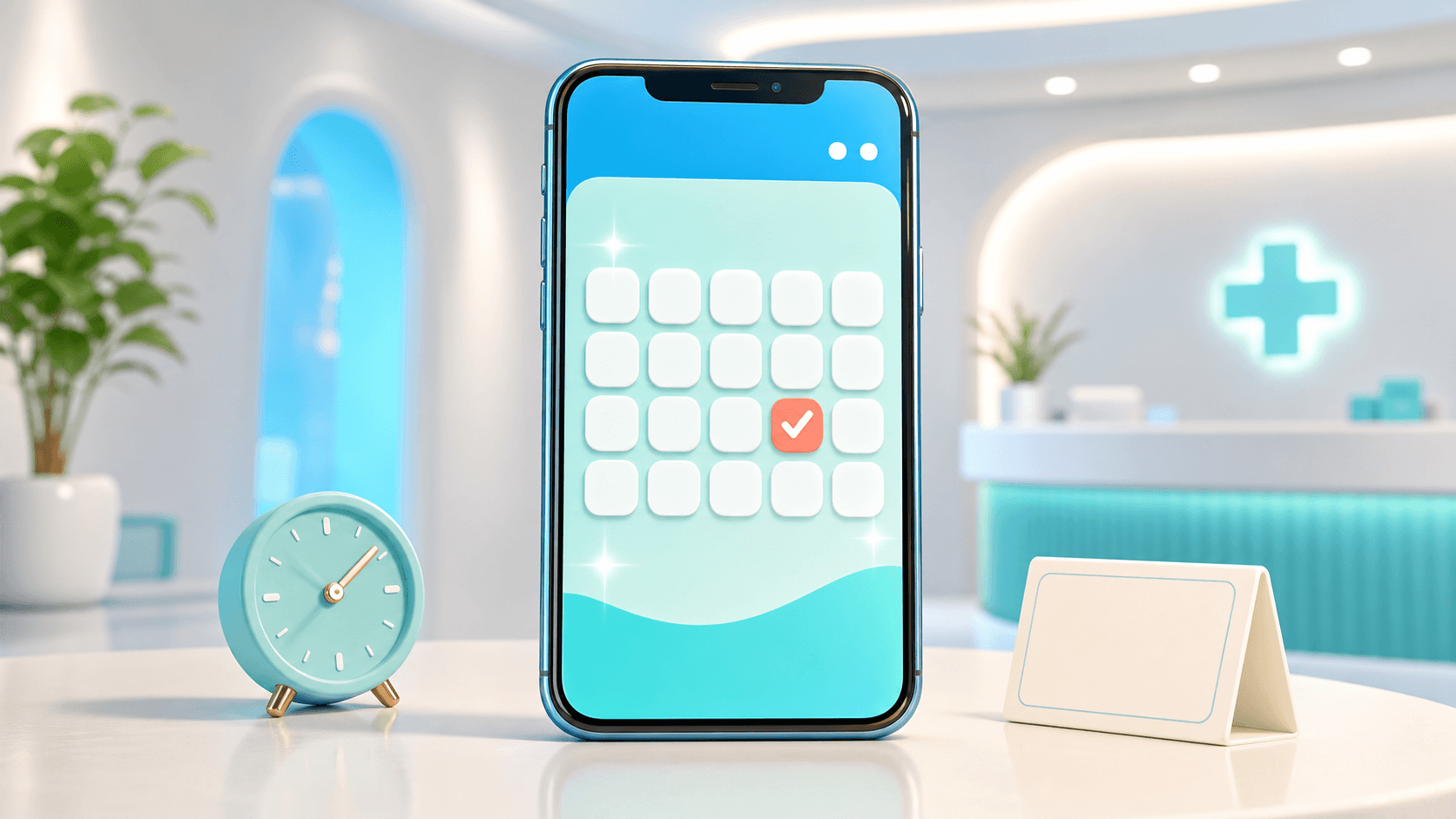
K-DIA is not just a scheduling shortcut. It is a patient-and-clinic app designed to make booking the starting point of a connected journey: appointment request, confirmation, reminders, consultation, review collection, revisit management, and operational insight.
For plastic surgery, dermatology, dental, and medical-tourism clinics, that distinction matters. A booking is rarely just a time slot. It is the first structured signal of patient intent, service interest, language needs, consultation context, and future follow-up.
Booking Belongs Inside the Patient Journey
Many clinics treat appointment booking as a separate task. A patient asks through one channel, a coordinator confirms through another, and the clinic later tries to connect that visit to consultation notes, reviews, or revisit activity.
K-DIA places booking at the center of the app experience. Patients can select an available slot, move through the booking flow, and receive reminders without leaving the same patient-facing environment.
That creates a cleaner operational rhythm for the clinic. Instead of managing scattered requests, the team works from structured reservation data that can remain connected to the rest of the patient relationship.
For directors evaluating a modern clinic platform, the value is not only speed. It is continuity. K-DIA’s patient-and-clinic app is built so the appointment can become the anchor for communication, CRM, and insight.
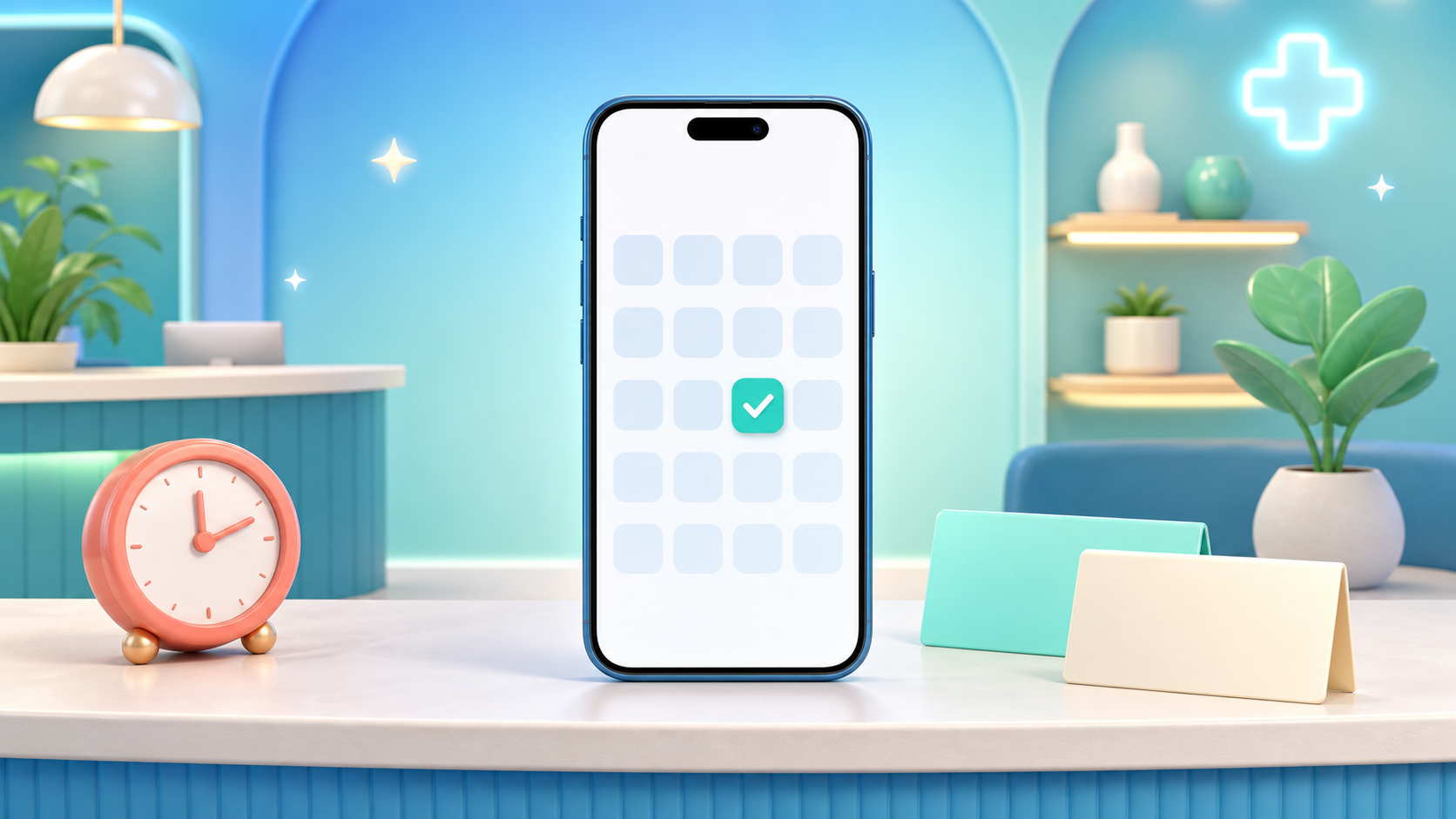
What One-Tap Booking Changes for Patients
The patient experience should feel simple: choose a slot, confirm the request, and know what happens next. K-DIA keeps that flow compact so the patient does not have to jump between forms, messages, and disconnected reminders.
For a first-time patient, this reduces friction at the moment of intent. For a returning patient, it makes revisits feel familiar because the booking path remains inside the same app environment.
Reminders stay attached to the visit
K-DIA’s reminders are not floating notifications with no context. They are connected to the appointment flow, so patients can recognize which booking the reminder belongs to.
This matters in high-touch clinics where patients may have multiple inquiries, consultations, or follow-up visits. A clearer reminder structure helps the clinic communicate without adding more manual explanation.
The clinic receives cleaner reservation data
A booking made inside K-DIA can carry more operational meaning than a loose message. It can indicate timing, patient intent, communication needs, and the next workflow step.
That structured data becomes useful beyond the front desk. It can support consultation preparation, review prompts, revisit CRM, and director-level visibility into everyday clinic activity.
Table: From scattered booking requests to a connected K-DIA flow
| Clinic moment | Fragmented workflow | K-DIA app-centered workflow |
|---|---|---|
| Appointment request | Messages arrive across separate channels | Patient starts from a guided booking flow |
| Confirmation | Staff manually clarifies time and status | Booking status stays visible in the app |
| Reminder | Reminder may be detached from context | Reminder is tied to the appointment |
| Pre-visit question | Conversation starts from scratch | Messaging remains linked to the booking |
| Follow-up | Review and revisit work are handled later | CRM steps can continue from the same relationship |
Messaging Works Better When It Knows the Appointment
Pre-visit communication often decides how smooth the visit feels operationally. Patients may ask what to prepare, confirm timing, share preferences, or clarify basic administrative details.
K-DIA’s in-app consultation and messaging help keep that communication close to the original appointment context. The clinic team does not need to reconstruct who the patient is, what they booked, or which visit the message refers to.
For the patient, this feels more coherent. For the clinic, it reduces repetitive coordination and gives staff a clearer view before the patient arrives.
This is especially important for clinics serving international patients. When multilingual support is part of the same booking and guidance flow, the clinic can offer a more consistent experience without splitting foreign patients into a separate process.
One Booking Can Feed the Clinic’s Operating System
A booking is the beginning of a data trail. In K-DIA, that trail can connect to consultation, reminders, reviews, revisits, and operational insight.
This is where K-DIA becomes more than a patient convenience feature. It helps the director see how clinic activity is forming across touchpoints, rather than only looking at isolated appointment counts.
For example, a clinic can observe how reservation flow connects with consultation volume, review collection activity, or revisit management. These are operational signals, not clinical claims, and they help leadership understand process quality.
Digital health guidance from organizations such as WHO and OECD consistently points to the importance of well-structured digital systems in healthcare operations. K-DIA applies that practical idea to the clinic’s front-line patient journey.
Reviews and Revisits Should Not Be Afterthoughts
After the visit, many clinics rely on memory, spreadsheets, or manual staff follow-up. That creates uneven execution, especially when the clinic is busy.
K-DIA gives clinics a more connected way to continue the relationship. Review collection and revisit CRM can follow from the same patient app environment that handled the appointment and communication.
The goal is not to force every patient into the same path. It is to give the clinic a consistent operating base so follow-up does not depend only on who remembered to send a message that day.
Table: How K-DIA connects the appointment lifecycle
| Lifecycle stage | K-DIA capability | Practical clinic impact |
|---|---|---|
| Before visit | One-tap booking and reminders | Patients see the booking flow and next step clearly |
| Before consultation | In-app messaging | Questions stay connected to appointment context |
| Visit preparation | Structured reservation data | Staff can work from cleaner patient information |
| After visit | Review collection | Review requests become part of the app journey |
| Ongoing relationship | Revisit and CRM management | Follow-up can be managed with more consistency |
| Director review | Operational data and insight | Daily activity becomes easier to interpret |
Why This Matters for International Clinic Operations
Clinics that serve both local and foreign patients need a booking system that does more than display availability. Patients may come through different languages, different expectations, and different communication habits.
K-DIA’s multilingual support helps bring those patients into the same booking and guidance structure. That gives the clinic a more unified workflow instead of creating a separate manual path for overseas inquiries.
Search and digital behavior research from Google has also made one point clear for years: patients and consumers expect fast, mobile-friendly journeys. K-DIA turns that expectation into a clinic-specific app flow, focused on appointment action rather than generic browsing.
For Korean clinics building international patient operations, this can be a practical advantage. The clinic can present a more organized digital front door while keeping internal follow-up connected to the same app-based record.
A Better Front Door for the Clinic Director
For the director, the booking screen is not just a patient interface. It is the front door of clinic operations.
When K-DIA handles booking, reminders, messaging, reviews, revisits, multilingual flow, and operational insight in one app, the clinic gains a clearer system for everyday patient movement.
That does not replace professional consultation or clinical judgment. It supports the operational layer around the patient journey, where clarity, timing, communication, and follow-up determine how well the clinic runs.
K-DIA is built for that layer. For clinics ready to evaluate a connected patient app, a K-DIA adoption consultation can show how the booking flow fits into the clinic’s current reception, consultation, and CRM process.
よくある質問
Is K-DIA only an appointment booking app?
No. Booking is the entry point, but K-DIA also supports reminders, in-app consultation and messaging, review collection, revisit CRM, multilingual patient flow, and operational insight for the clinic.
How does one-tap booking help clinic staff?
It gives staff more structured reservation data and keeps booking status, reminders, and related communication in one app flow instead of scattered across separate channels.
Can K-DIA support foreign patients?
Yes. K-DIA includes multilingual support so international patients can use a more consistent booking and guidance flow with the clinic.
Does K-DIA make clinical or treatment outcome claims?
No. K-DIA supports clinic operations around scheduling, communication, review collection, revisit management, and data visibility. Clinical decisions remain with licensed professionals.
参考資料
関連記事
App Features
How K-DIA Turns Appointment Reminders Into an In-App Patient Experience
See how K-DIA keeps booking, reminders, consultation, reviews, and revisit CRM in one app-based patient journey for modern clinics.
App Features
K-DIA Automatic Reminders: Helping Patients Remember Their Appointments
How K-DIA keeps bookings, reminders, consultation, reviews and revisit management connected inside one clinic app.
App Features
K-DIA In-App Consultation: Keeping Every Patient Conversation in One Place
See how K-DIA brings consultation, booking, reminders, reviews, revisits, multilingual support, and clinic insight into one app-centered workflow.